How to Conduct a Systematic Literature Review (SLR) and Synthesize Prior Work Like a Senior Researcher
A practical walkthrough for PhD scholars and engineering authors.

A literature review that lists papers one after another is easy to write and easy to reject. A systematic literature review (SLR) does something harder. It follows a documented method, so another researcher could repeat your search and arrive at the same set of papers. Journals value this because it makes the review fair, transparent, and checkable. Guidelines such as Kitchenham and Charters [1] and the PRISMA 2020 statement [2] describe the process, and Fig. 1 shows it in six steps[cite: 5].
Senior researchers add one more thing: they synthesize. They do not report what each paper did. They show patterns, conflicts, and gaps across the whole body of work. This guide covers both the method and the thinking[cite: 5].
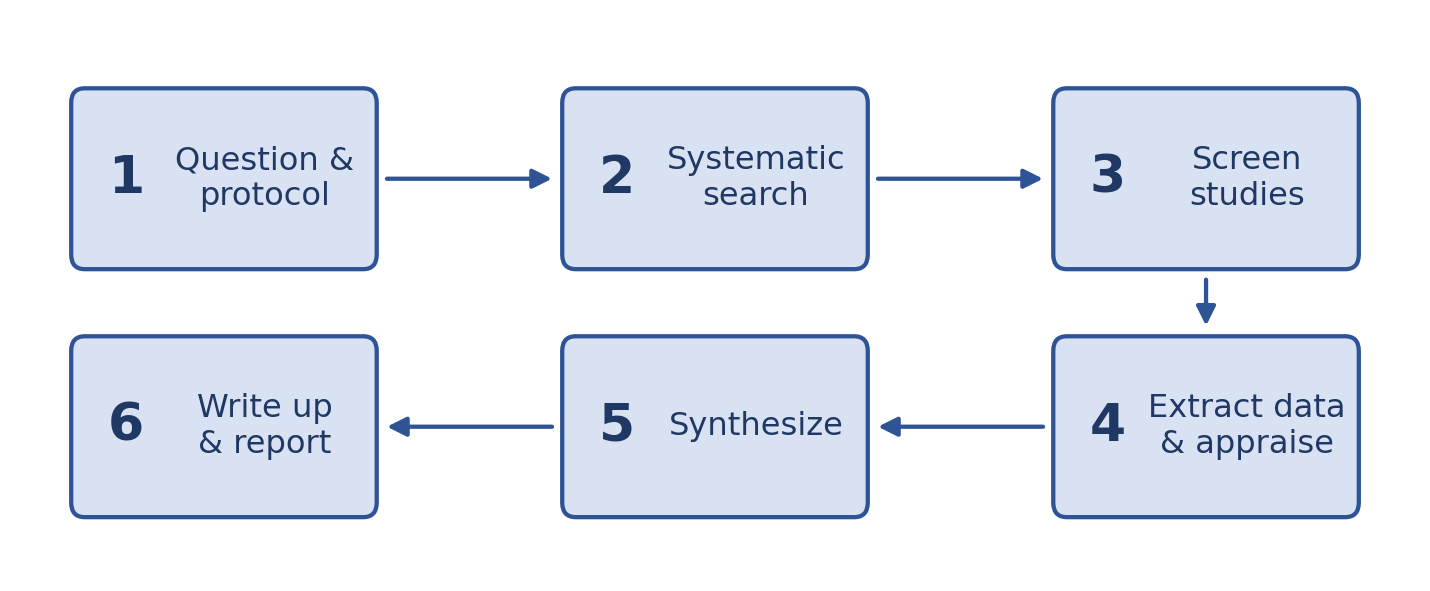
Fig. 1. The six steps of a systematic literature review[cite: 5].
Step 1: Define the Question and Write a Protocol
Everything downstream depends on a sharp question. 'What is known about machine learning in maintenance?' is far too broad. Frame the question with a structure such as PICO(C): population, intervention, comparison, outcome, and context [3]. First, check that an SLR is the right type of review[cite: 5].
| Review type | Use it when | Output |
|---|---|---|
| Narrative review | You need background or an expert view | Selective overview |
| Mapping study | You want to chart a broad area | Counts and categories |
| Systematic review | You need a defensible answer to a focused question | Transparent synthesis |
| Meta-analysis | Studies report comparable numbers | Pooled estimate |
Write two to four research questions, such as: RQ1, which architectures are used? RQ2, how are they validated? RQ3, what gaps remain[cite: 5]?
Write a protocol before you search: databases, search strings, criteria, extraction fields, quality questions, and how disagreements are resolved[cite: 5].
Date-stamp the protocol in a repository or on OSF. It proves you did not change the criteria after seeing the results[cite: 5].
Step 2: Search Systematically
- Use at least two or three major databases, such as Scopus, Web of Science, and IEEE Xplore or ScienceDirect[cite: 5].
- Do not rely on Google Scholar alone. Its results are hard to reproduce and cannot be exported cleanly[cite: 5, 4].
- Build the search string from concept blocks. Join synonyms with OR inside a block, and join blocks with AND (Fig. 2)[cite: 5].
- Pilot the string. If it misses five to ten papers you already know are relevant, revise it[cite: 5].
- Record the database, date, string, filters, and number of hits for every search[cite: 5].
- Add backward and forward snowballing to catch papers the databases missed[cite: 5, 5].
Scopus search string
TITLE-ABS-KEY(
  ("predictive maintenance" OR "condition monitoring"
   OR prognostics)
  AND ("deep learning" OR "neural network*")
  AND ("rotating machinery" OR bearing* OR gearbox*) )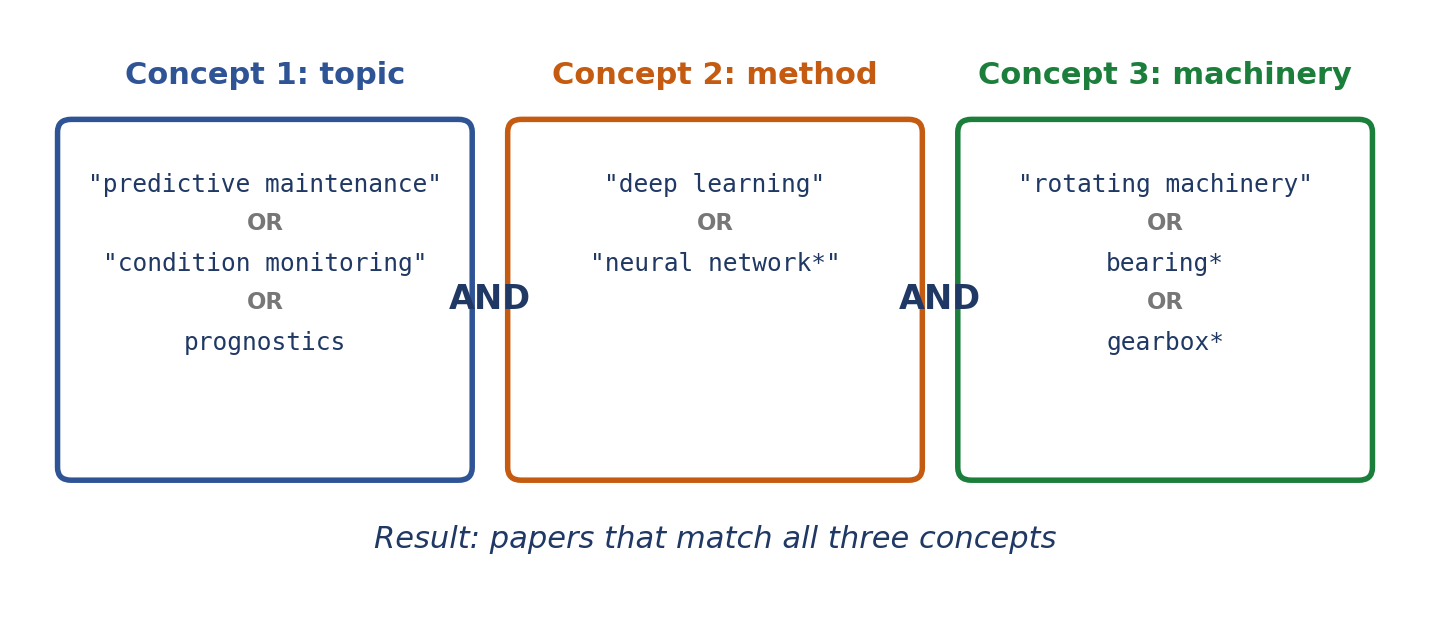
Fig. 2. A search string built from concept blocks: OR inside a block, AND between blocks[cite: 5].
Step 3: Screen Studies Transparently
Write your inclusion and exclusion criteria before screening, and apply them the same way to every paper[cite: 5].
| Criterion | Include | Exclude |
|---|---|---|
| Period | 2015 to 2025 | Earlier work |
| Type | Peer-reviewed journal and conference papers | Editorials, theses, posters |
| Topic | Deep-learning fault diagnosis of rotating machinery | Other machinery or methods |
| Evidence | Reports experimental results | Concept papers without data |
- Remove duplicates first, using the DOI or a cleaned title (code below)[cite: 5].
- Screen in two rounds: titles and abstracts, then full texts. Record the reason for every full-text exclusion[cite: 5].
- Tools such as Rayyan [6] and Zotero make this much easier[cite: 5].
- Have two reviewers screen at least a sample independently. Measure agreement with Cohen's kappa [7] and settle disagreements by discussion[cite: 5].
import pandas as pd
df = pd.read_csv('records.csv')
df['key'] = (df['doi'].str.lower()
    .fillna(df['title'].str.lower()
    .str.replace(r'\W+', '', regex=True)))
dedup = df.drop_duplicates('key')
print(len(df), '->', len(dedup))
Report the counts in a PRISMA 2020 flow diagram [2] (Fig. 3)[cite: 5, 2].
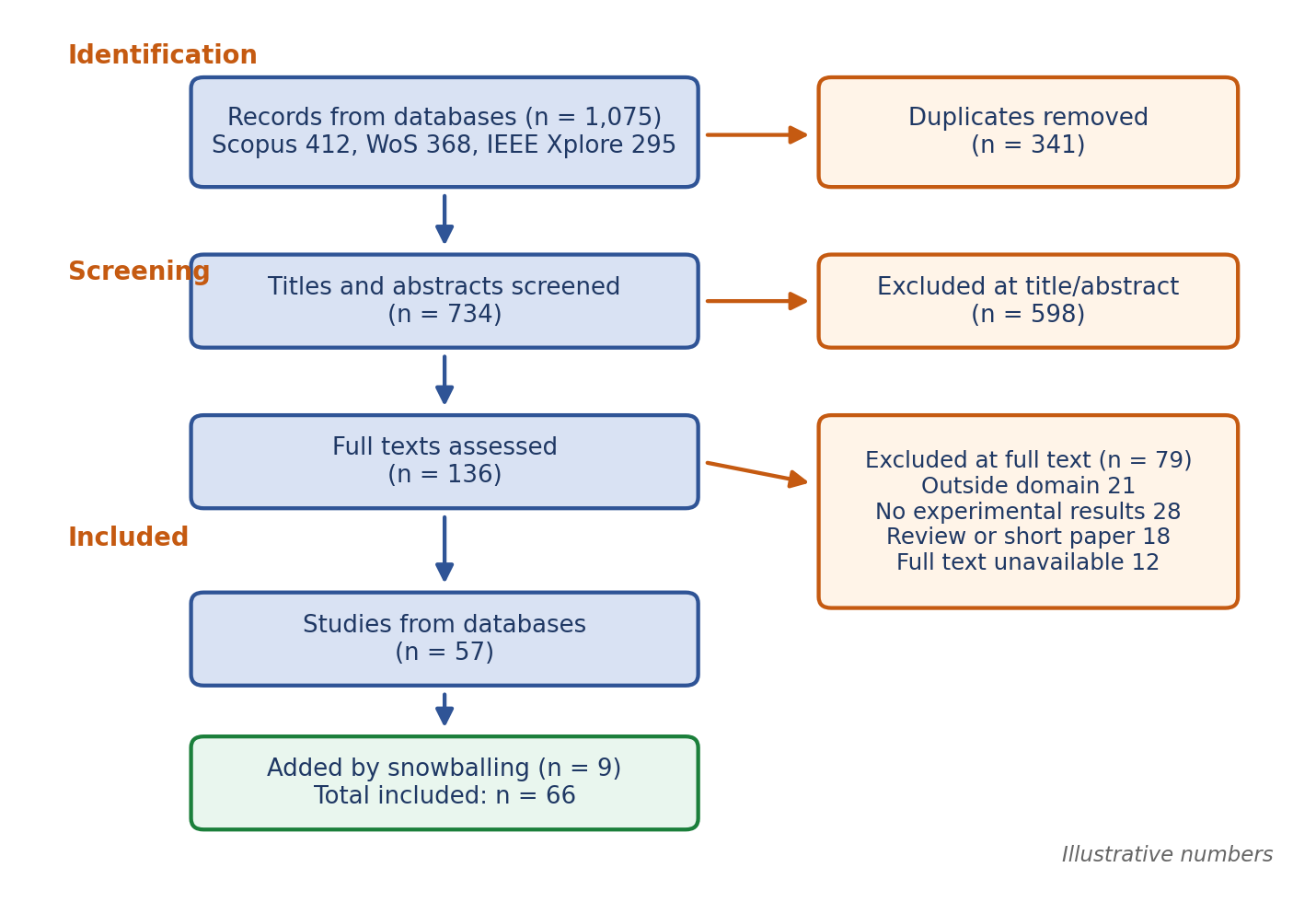
Fig. 3. A PRISMA-style flow diagram with illustrative numbers[cite: 5].
Step 4: Extract Data and Judge Quality
- Build the extraction sheet before reading in depth. Typical columns: citation, year, problem, method, data, metrics, results, and limitations[cite: 5].
- Pilot the sheet on five papers, then fix it. Changing columns later means re-reading everything[cite: 5].
- Copy numbers exactly as reported, with units, conditions, and page numbers[cite: 5].
- Judge quality with four to six yes/no questions, such as: Are the aims clear? Is the data described? Are the baselines fair? Are limitations stated[cite: 5]?
- Do not hide weak studies. Say how they affect your confidence in the findings[cite: 5].
Step 5: Synthesize Like a Senior Researcher
This is where reviews succeed or fail. A summary says what each paper did. A synthesis says what the papers mean together (Fig. 4)[cite: 5].
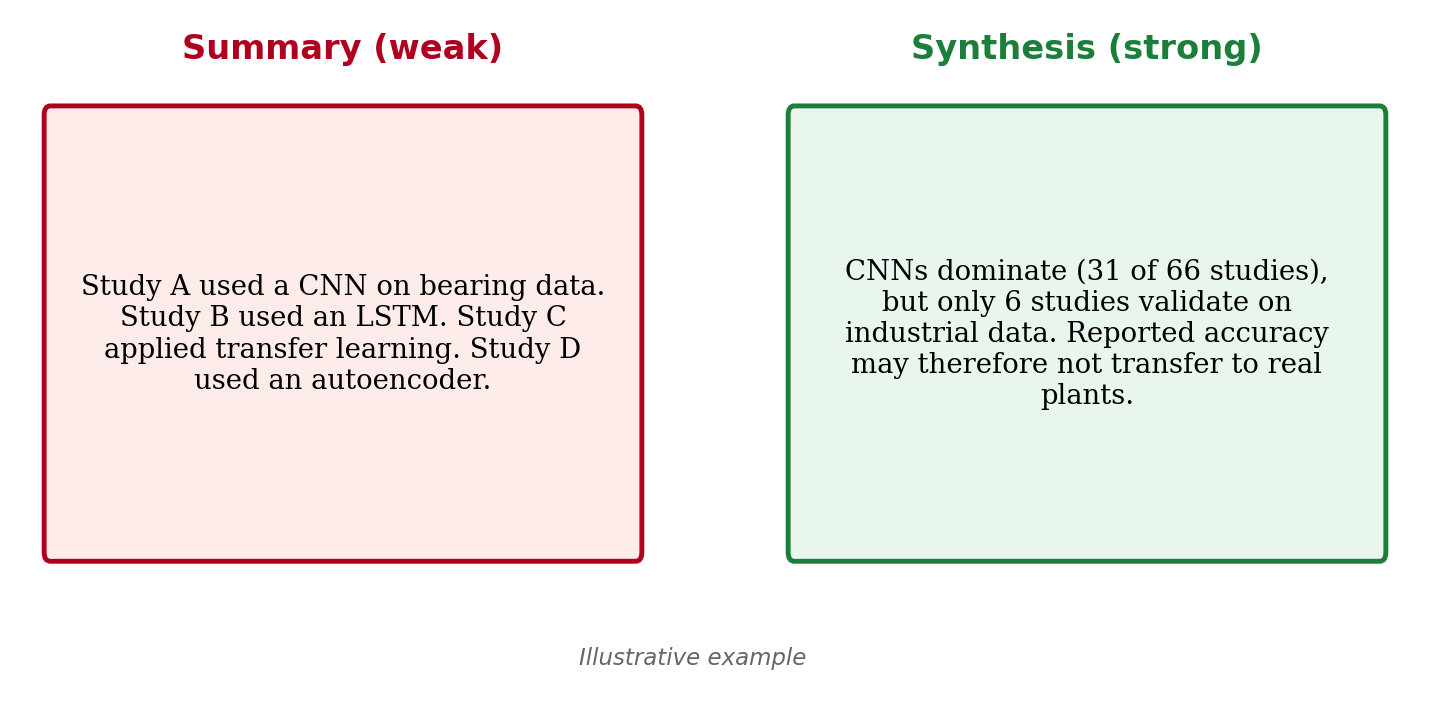
Fig. 4. Summary versus synthesis: the second paragraph interprets the pattern (illustrative)[cite: 5].
- Build a concept matrix with papers as rows and themes as columns [8]. The column totals show you what the field actually studies (Fig. 5)[cite: 5].
- Code the papers systematically. Thematic analysis gives a clear routine: read, code, group, and name the themes [9][cite: 5].
- Turn themes into a taxonomy that organizes the methods and shows how they relate (Fig. 6)[cite: 5].
- Compare results on common metrics only when conditions are comparable. When they are not, say so[cite: 5].
- Look for contradictions, and offer reasons: different data, settings, or definitions[cite: 5].
- For large sets, keyword and co-citation maps from VOSviewer can reveal clusters you did not expect [10][cite: 5].
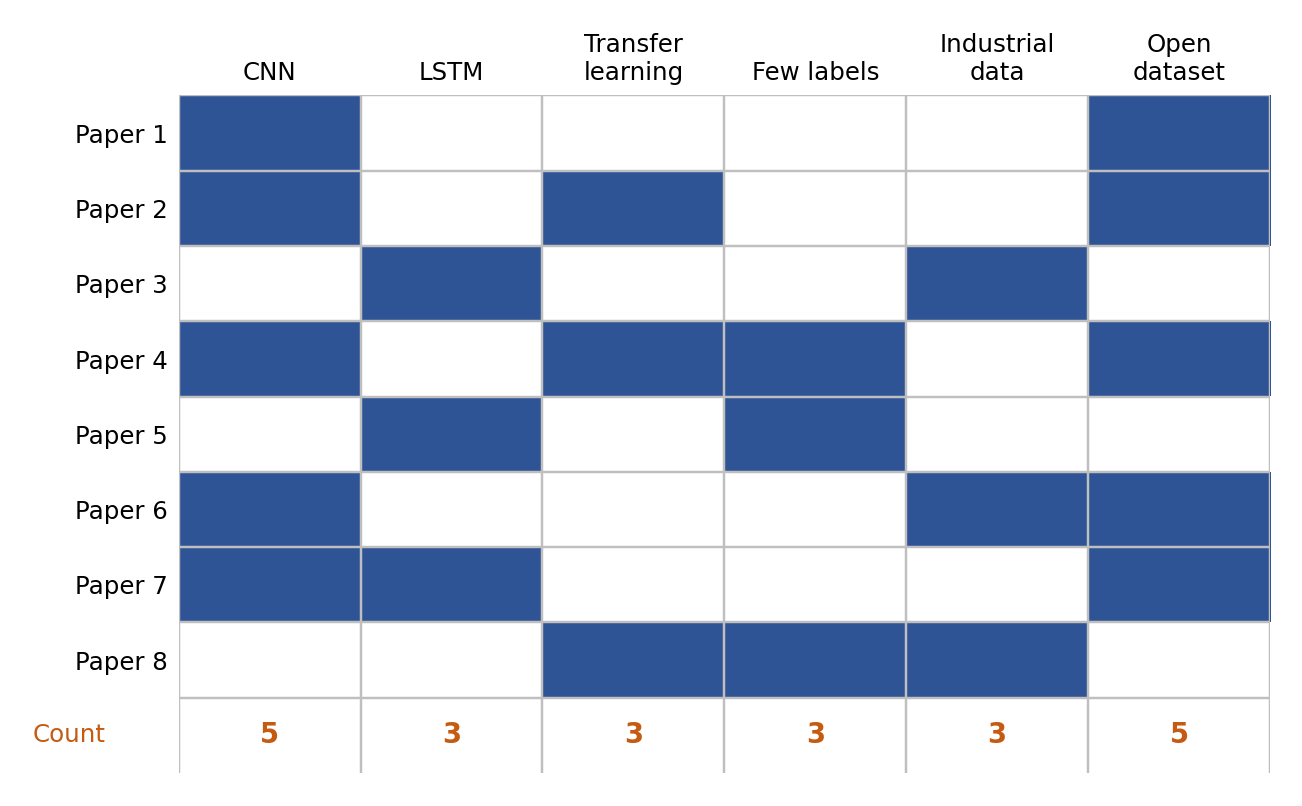
Fig. 5. A concept matrix: papers as rows, themes as columns, totals at the bottom (illustrative)[cite: 5].
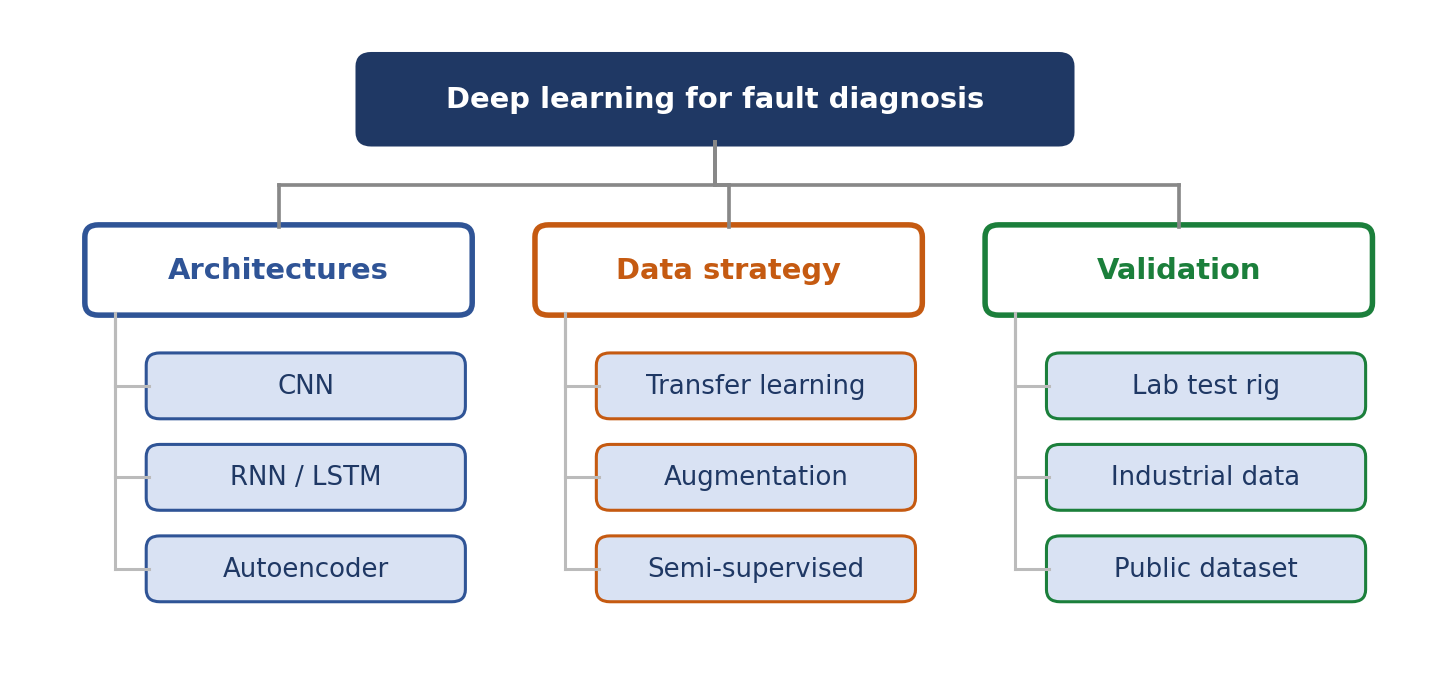
Fig. 6. A taxonomy built from the themes found in the reviewed papers[cite: 5].
Find the Gap
Cross two dimensions, such as method and application, and count the studies in each cell (Fig. 7). Thin cells are candidate gaps. Check that a gap matters and is not just empty. A real gap is one a reviewer would agree is worth filling[cite: 5].
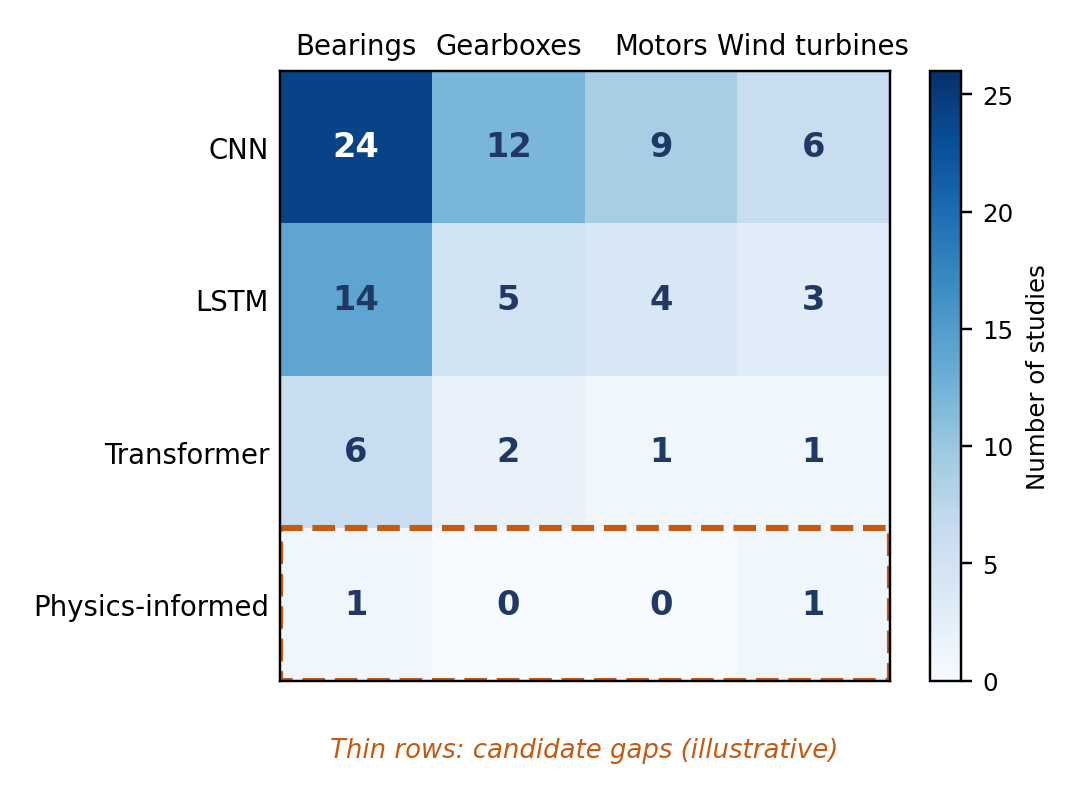
Fig. 7. A gap map: methods against applications, with thin rows highlighted (illustrative)[cite: 5].
Step 6: Write It Up and Report It
- Structure: Introduction, Method (databases, strings, criteria, flow diagram), Results (descriptive statistics, then themes), Discussion, Threats to validity, and Conclusion[cite: 5].
- Write each theme as an argument. Open with the finding, then support it with the studies[cite: 5].
- Use tables for details and prose for insight. Never walk through papers one by one[cite: 5].
- Be honest about limits: database coverage, language, publication bias, and subjective coding[cite: 5].
- Tie future directions to the gaps you found[cite: 5].
- Share search strings and the extraction sheet as supplementary files so others can reproduce your work[cite: 5].
Common Mistakes
- Searching only one database, or only Google Scholar[cite: 5].
- Changing criteria halfway without recording it[cite: 5].
- Listing papers instead of synthesizing them[cite: 5].
- Skipping quality appraisal[cite: 5].
- Submitting with a stale search. Re-run it shortly before you submit[cite: 5].
- Ending with vague gaps[cite: 5].
Final Checklist
- Research questions and protocol are written and dated[cite: 5].
- Search strings, databases, dates, and hit counts are recorded[cite: 5].
- Criteria are fixed, and screening is documented in a PRISMA flow diagram[cite: 5].
- Extraction and quality sheets are complete[cite: 5].
- Synthesis shows themes, a taxonomy, and clear gaps[cite: 5].
- Limitations and supplementary files are ready[cite: 5].
A strong review is not the one with the most papers. It is the one a reader can trust, repeat, and build on. Follow the method, show your work, and let the synthesis carry your argument[cite: 5].
References
- B. Kitchenham and S. Charters, "Guidelines for performing systematic literature reviews in software engineering," Keele Univ. and Durham Univ., Tech. Rep. EBSE-2007-01, 2007[cite: 5].
- M. J. Page et al., "The PRISMA 2020 statement: An updated guideline for reporting systematic reviews," BMJ, vol. 372, Art. no. n71, 2021[cite: 5].
- M. Petticrew and H. Roberts, Systematic Reviews in the Social Sciences: A Practical Guide. Malden, MA, USA: Blackwell, 2006[cite: 5].
- M. Gusenbauer and N. R. Haddaway, "Which academic search systems are suitable for systematic reviews or meta-analyses?" Research Synthesis Methods, vol. 11, no. 2, pp. 181-217, 2020[cite: 5].
- C. Wohlin, "Guidelines for snowballing in systematic literature studies and a replication in software engineering," in Proc. 18th Int. Conf. Eval. Assessment Softw. Eng. (EASE), 2014, Art. no. 38[cite: 5].
- M. Ouzzani, H. Hammady, Z. Fedorowicz, and A. Elmagarmid, "Rayyan: A web and mobile app for systematic reviews," Systematic Reviews, vol. 5, Art. no. 210, 2016[cite: 5].
- J. Cohen, "A coefficient of agreement for nominal scales," Educational and Psychological Measurement, vol. 20, no. 1, pp. 37-46, 1960[cite: 5].
- J. Webster and R. T. Watson, "Analyzing the past to prepare for the future: Writing a literature review," MIS Quarterly, vol. 26, no. 2, pp. xiii-xxiii, 2002[cite: 5].
- V. Braun and V. Clarke, "Using thematic analysis in psychology," Qualitative Research in Psychology, vol. 3, no. 2, pp. 77-101, 2006[cite: 5].
- N. J. van Eck and L. Waltman, "Software survey: VOSviewer, a computer program for bibliometric mapping," Scientometrics, vol. 84, no. 2, pp. 523-538, 2010[cite: 5].
Need Help with Systematic Literature Reviews?
Get expert research methodology and data synthesis support from ScholarGrid consultants.
Direct Email: scholargrid030@gmail.com