Common Reasons Engineering Manuscripts Get Rejected by Journals (And How to Avoid Them)
A practical walkthrough for PhD scholars and engineering authors.

Almost every researcher gets rejected, including people with long publication lists. The useful question is why. Most rejections come from a handful of fixable problems, and many happen before a reviewer reads your abstract.
There are two kinds. A desk rejection means the technical check or the editor stops the paper early. A post-review rejection means reviewers read it and found problems with the work. Fig. 1 shows where each reason in this guide strikes. Always read the journal's own Guide for Authors first.
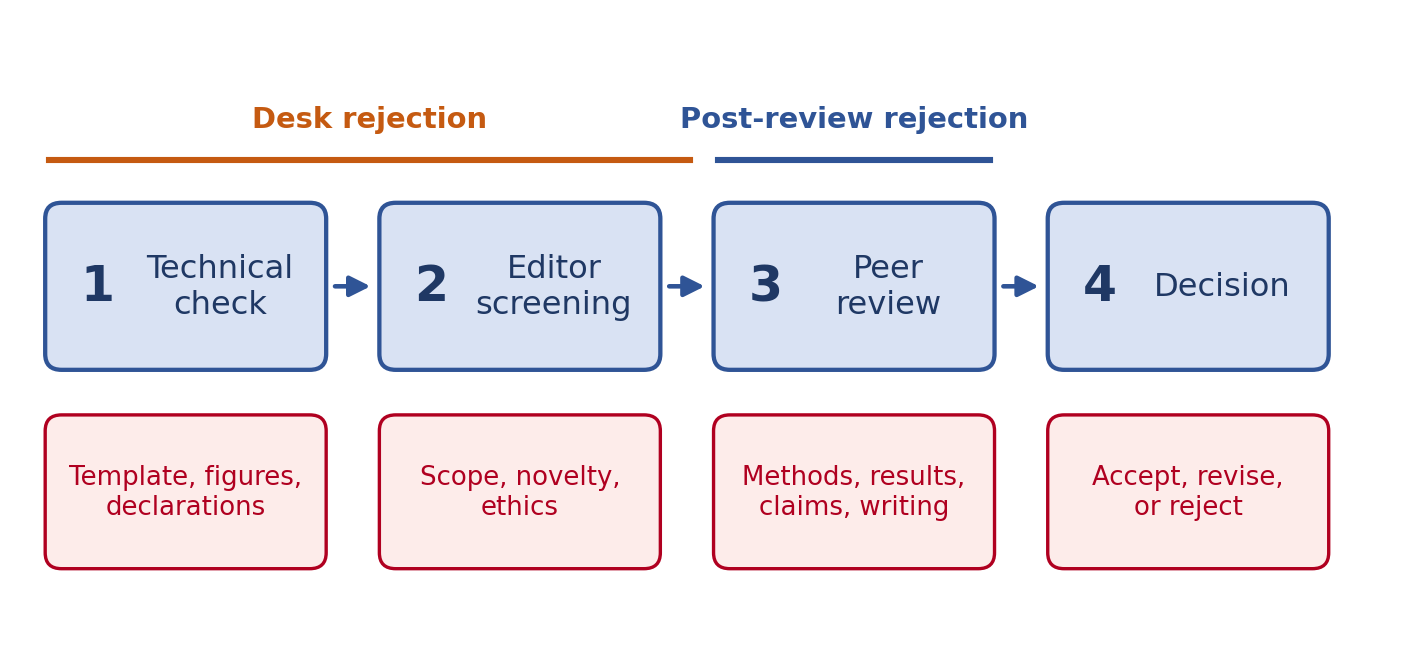
Fig. 1. Where a manuscript can be stopped, and the reasons that usually do it.
Reason 1: Poor Fit With the Journal's Scope
This is the most common desk rejection and the most avoidable. A strong paper sent to the wrong journal still gets rejected.
Editors screen many submissions every week. If your title, abstract, and cover letter do not match the journal's topics, the paper rarely gets past the first look. Some journals also avoid certain article types, such as simulation-only studies or small extensions of earlier work.
- Read the aims and scope page, not just the journal's name.
- Skim the last three or four issues. Do the topics, depth, and article types match yours?
- Find five recent papers close to yours. If none are from this journal, ask yourself why.
- In the cover letter, say in two sentences why this journal is the right audience.
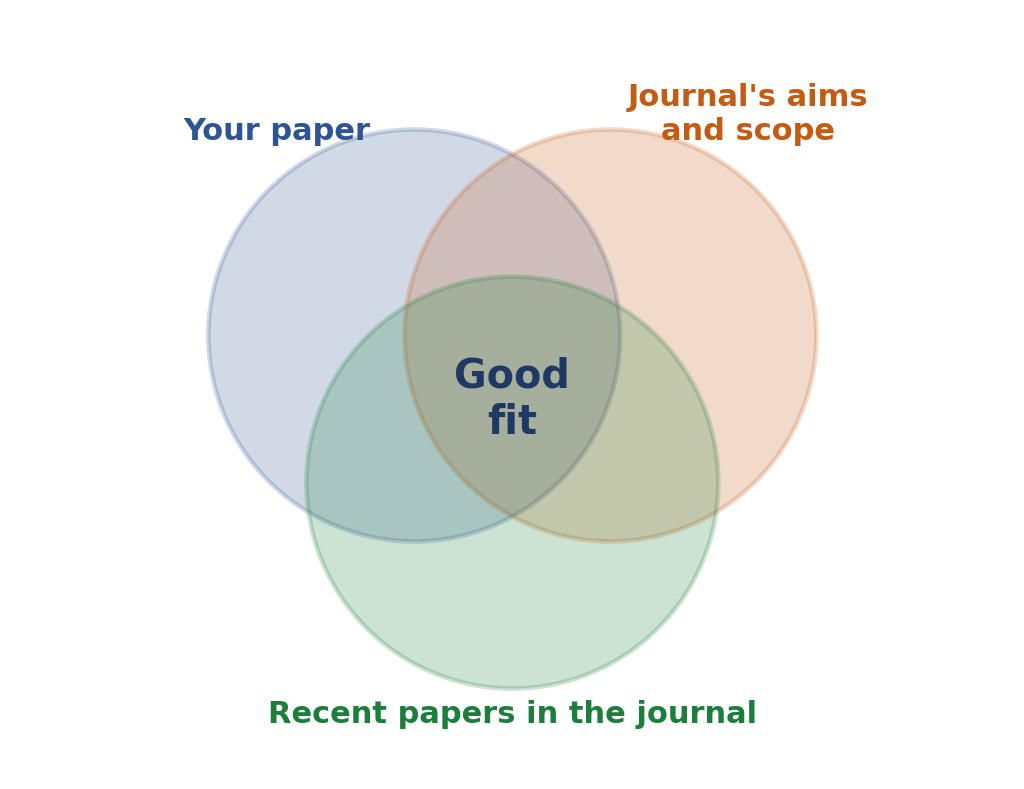
Fig. 2. A good fit sits where your paper, the journal's scope, and its recent papers overlap.
Reason 2: The Novelty Is Not Clear
Reviewers often write 'incremental' or 'limited novelty'. Usually the work is fine, but the paper never says what is new.
- State the gap in one sentence in the introduction, backed by specific related work.
- List two or three contributions. Make each one concrete and checkable (Fig. 3).
- Compare against the closest recent methods, not weak older ones.
- Describe what you learned, not just what you did. 'We designed, built, and tested' describes work. 'This cuts error by 18%' describes a contribution.
- Be honest. A known method applied to a new problem is a valid contribution if you say so.
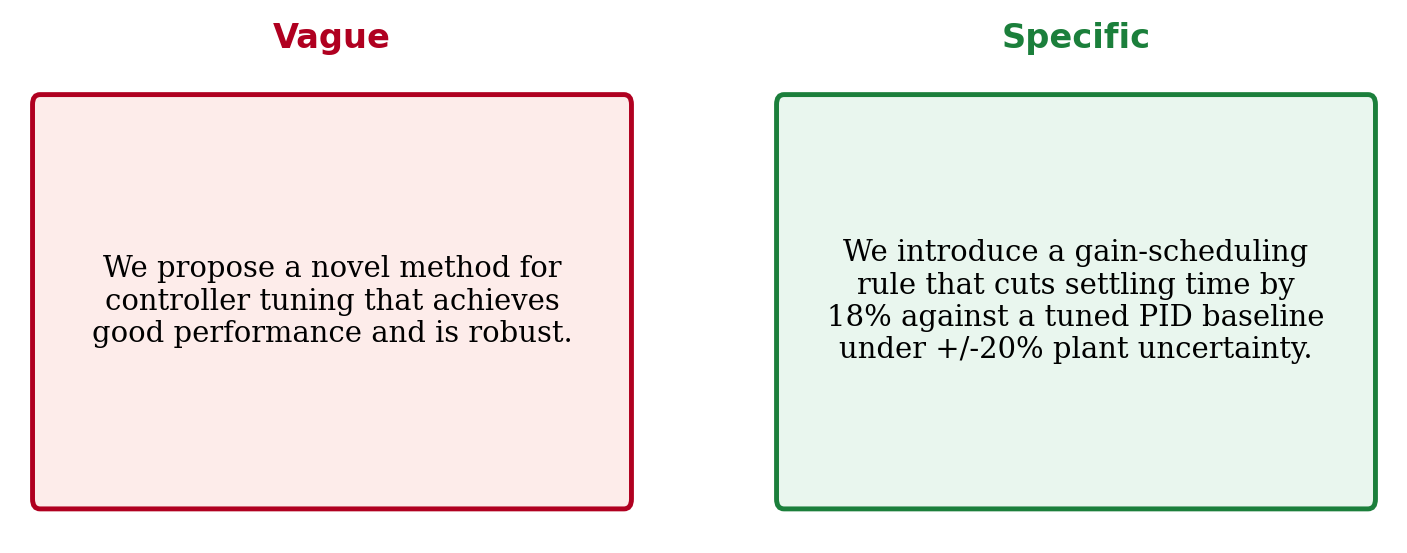
Fig. 3. A vague contribution statement versus a specific, checkable one (illustrative).
Reason 3: Weak Methods and Poor Reproducibility
If a reviewer cannot tell what you did, they cannot trust what you found. Reproducibility is now an expectation, not a bonus.
- Report parameters, datasets, hardware, software versions, and settings.
- Use fair baselines: same data, same tuning effort, same metrics.
- Repeat experiments and report mean and spread, not one lucky run (Fig. 4).
- Share code or data where you can, following the FAIR principles.
- Explain why your test conditions are realistic, and say which conditions you left out.
The usual gaps are missing hyperparameters, unclear train and test splits, undefined measurement conditions, and baselines copied from older papers that ran under different settings.
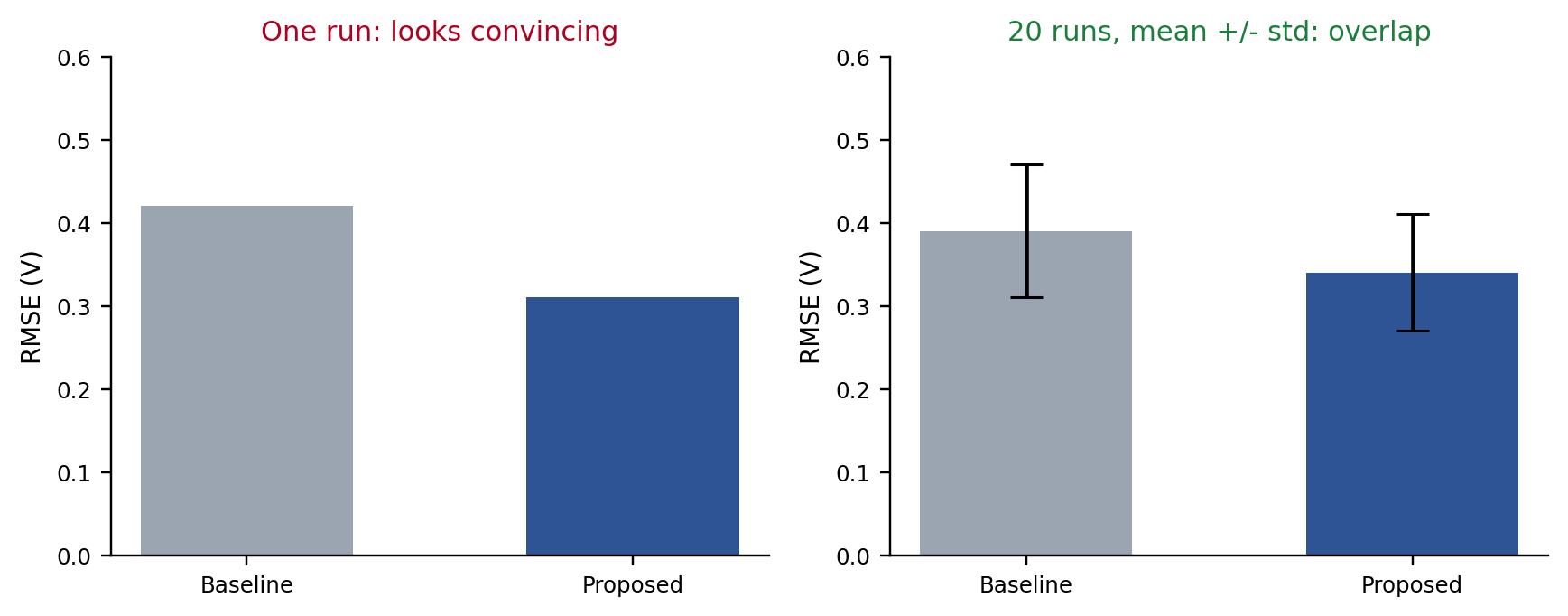
Fig. 4. A single run can hide noise. Repeated runs with error bars show whether a difference is real.
Reason 4: Claims the Results Do Not Support
Overclaiming is a favorite target for reviewers. Words like 'robust', 'real-time', 'optimal', and 'outperforms' all need matching evidence (Fig. 5).
- Tie every claim in the abstract to a specific result in the paper.
- Report effect sizes and uncertainty, and do not lean on a single p-value.
- Say where the method fails and which assumptions matter.
- Check that figures, tables, and text agree. Mismatched numbers destroy trust fast.
Simulation-only work is a good example. Calling a result 'validated' without experiments, or at least a high-fidelity model, invites a reviewer to say so. Write 'in simulation' wherever that is the truth.
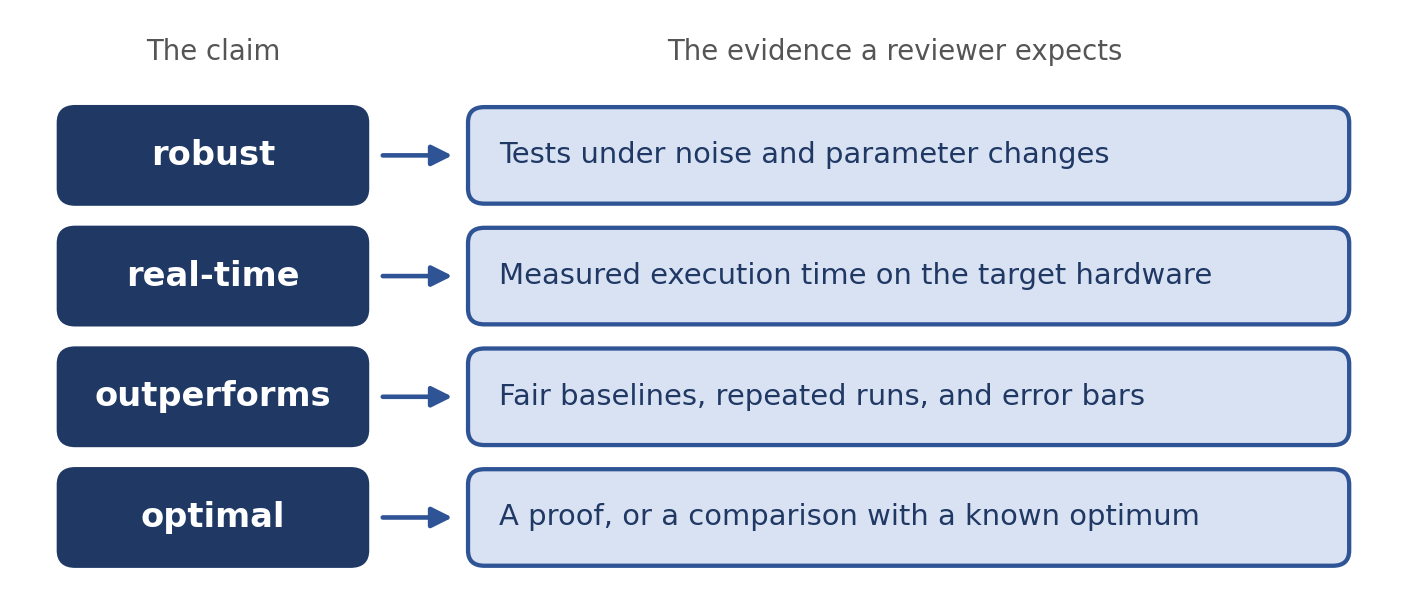
Fig. 5. Strong words need matching evidence.
Reason 5: Formatting and Technical-Check Failures
These are the most frustrating rejections because they have nothing to do with your science. Many journals run a check before the editor ever sees the paper. Our companion formatting guide covers templates, equations, figures, and references in detail.
| Problem | Quick Fix |
|---|---|
| Outdated or wrong template | Download the current one from the journal page |
| Low-resolution or screenshot figures | Export vector files and check the dpi |
| Missing declarations (funding, interests, data, author roles) | Fill in every item on the journal's list |
| Broken references such as [?] | Compile from scratch and read the PDF |
| Names left in a double-blind submission | Remove names, self-citations in the first person, and identifying acknowledgments |
Reason 6: Ethics and Originality Problems
Editors take these seriously, and they can end in rejection or worse. Most cases come from carelessness, not bad intent.
- A classic trap is overlap with your own conference paper. Extending a conference paper is normal, but the journal expects clearly new material and a note explaining what changed.
- Run a similarity check before you submit if your institution offers one. Rewrite overlapping text, even from your own earlier papers.
- Never submit the same work to two journals at once, and do not split one study into several thin papers.
- Agree on authorship early. Everyone listed should have contributed, and nobody who contributed should be missing.
- Disclose AI tools, funding, and conflicts of interest as the journal requires.
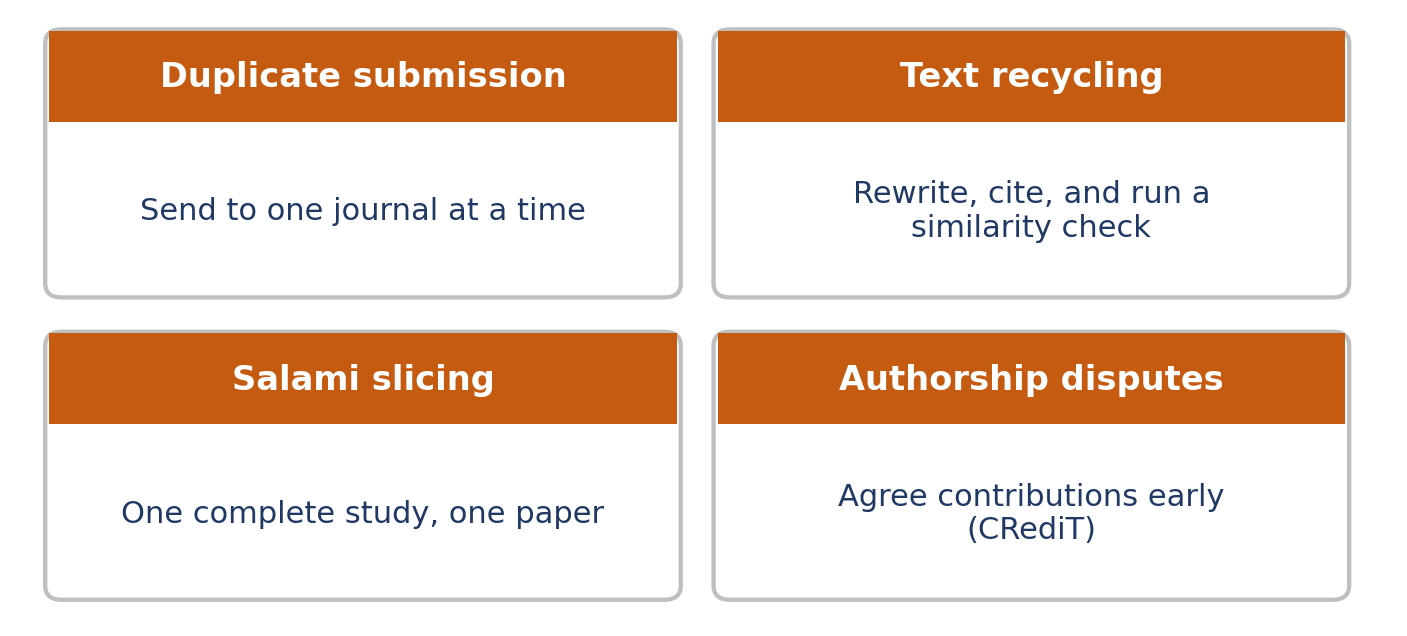
Fig. 6. Four ethics red flags and the habit that avoids each.
Reason 7: Unclear Writing and a Thin Literature Review
Reviewers are busy volunteers, and a confusing paper loses their goodwill quickly. They forgive a few language slips. They do not forgive a paper they cannot follow.
- Put one idea in each paragraph, with the main point in the first sentence.
- Define abbreviations and keep notation consistent.
- Ask someone outside your project to read it. If English is not your first language, consider a professional editing service.
- Cover the key papers and recent work, and be fair to competing methods.
- Limit self-citation to what is relevant, and cite primary sources.
What to Do After a Rejection
A rejection is information. Read the letter, wait a day, and read it again. Peer review is imperfect and reviewers often disagree, so you do not have to accept every comment. Take repeated comments seriously, though.
- If reviewers found real problems, fix them before sending the paper elsewhere. The next reviewers may be the same people.
- Reformat completely for the next journal, including the cover letter and references.
- Do not resubmit within days to a lower-ranked journal with no changes. The same weaknesses will come back.
- Appeal only if you see a clear factual error, and do it once, politely, with evidence (Fig. 7).
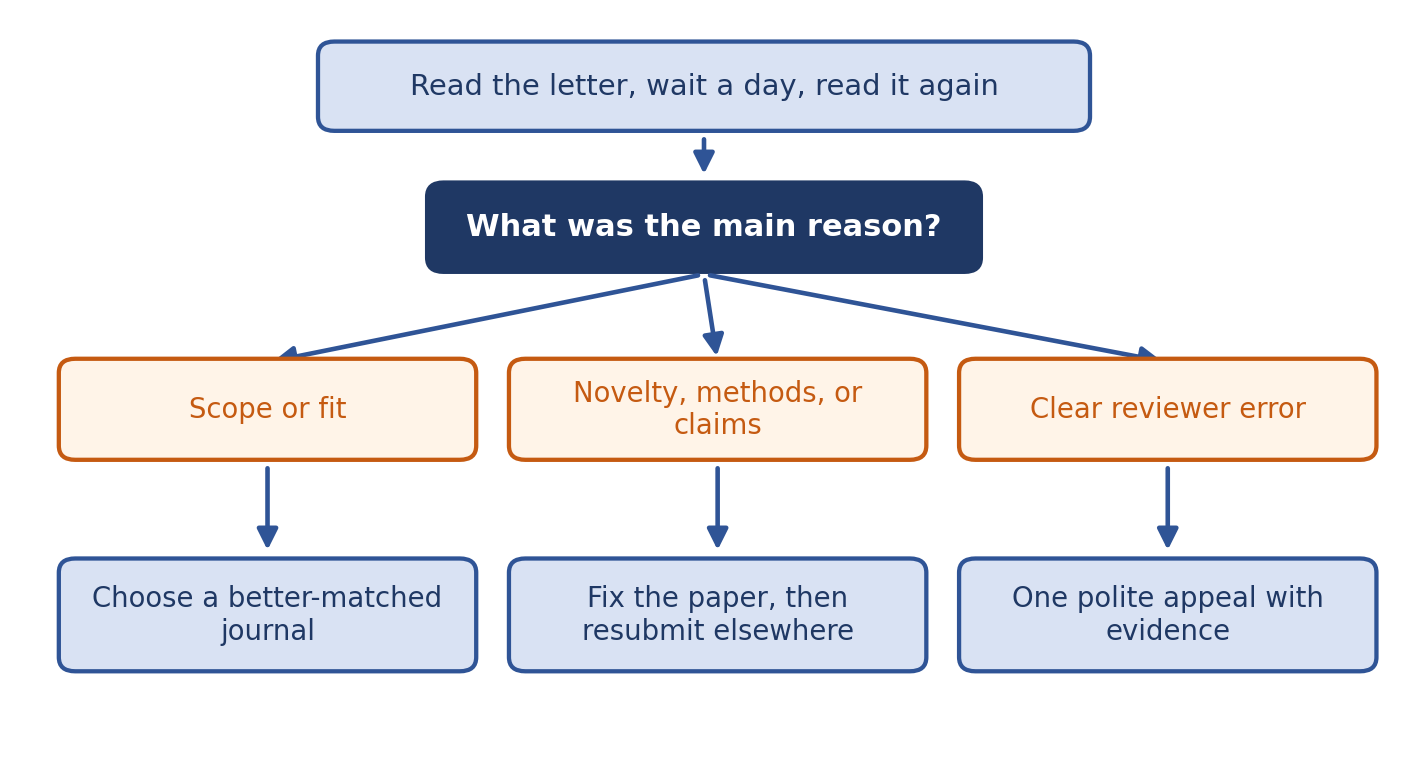
Fig. 7. A simple decision path after a rejection.
Pre-Submission Checklist
- The journal's scope and recent papers match your topic.
- Your contributions are stated in one clear list.
- Methods are complete, baselines are fair, and results include uncertainty.
- Every claim has evidence, and limitations are stated.
- Template, figures, references, and declarations pass the journal's checklist.
References
- Elsevier, "Guide for Authors," available on each journal's homepage at sciencedirect.com.
- J. Pineau et al., "Improving reproducibility in machine learning research (a report from the NeurIPS 2019 reproducibility program)," Journal of Machine Learning Research, vol. 22, no. 164, pp. 1-20, 2021.
- M. D. Wilkinson et al., "The FAIR Guiding Principles for scientific data management and stewardship," Scientific Data, vol. 3, Art. no. 160018, 2016.
- R. L. Wasserstein and N. A. Lazar, "The ASA statement on p-values: Context, process, and purpose," The American Statistician, vol. 70, no. 2, pp. 129-133, 2016.
- A. Brand, L. Allen, M. Altman, M. Hlava, and J. Scott, "Beyond authorship: Attribution, contribution, collaboration, and credit," Learned Publishing, vol. 28, no. 2, pp. 151-155, 2015.
- Crossref, "Similarity Check," crossref.org.
- Committee on Publication Ethics (COPE), "Core Practices," publicationethics.org.
- C. J. Kelly, A. Sadeghieh, and K. Adeli, "Peer review in scientific publications: Benefits, critiques, and a survival guide," EJIFCC, vol. 25, no. 3, pp. 227-243, 2014.
- L. Bornmann, "Scientific peer review," Annual Review of Information Science and Technology, vol. 45, no. 1, pp. 197-245, 2011.
Want to Avoid Desk Rejection?
Get a free pre-submission technical check & professional formatting overhaul from ScholarGrid experts.
Direct Email: scholargrid030@gmail.com